Global ERP Market Trends in 2026: What Buyers Should Know
The best ERP software in 2026 is no longer defined solely by the number of modules it offers. As organizations grow across locations, business units, and markets, many struggle with disconnected systems, reporting delays, and limited operational visibility. Modern enterprise resource planning software addresses these challenges by connecting finance, human resources, procurement, manufacturing, supply chain, and customer-facing functions within a unified platform.
Businesses today expect ERP platforms to do more than record transactions. They expect real-time visibility, workflow automation, and actionable insights that improve decision-making across the organization. As companies continue investing in digital business transformation, ERP has evolved into a strategic technology platform that supports agility, resilience, and long-term growth through integrated business software.
The global ERP market continues to expand as organizations prioritize automation, scalability, and data-driven decision-making. However, one of the most significant shifts influencing ERP selection today is the growing demand for intelligence and automation.
How ERP Selection Is Changing in 2026
For years, organizations evaluated ERP systems primarily on functionality and deployment options. Today, buying priorities are changing.
Businesses increasingly expect ERP platforms to improve business operations management, automate routine workflows, and provide predictive insights that help leaders act faster. As a result, organizations are moving beyond traditional ERP systems and investing in solutions that combine operational depth with artificial intelligence.
Modern AI ERP software can analyze business data, identify patterns, forecast demand fluctuations, and surface operational risks before they impact performance. An AI-powered ERP solution can also automate approvals, improve inventory planning, strengthen forecasting accuracy, and support faster decision-making across departments.
This shift toward the intelligent ERP system model is redefining buyer expectations. ERP is no longer viewed as a system of record. It is increasingly becoming a platform for automation, insight generation, and continuous improvement.
How We Evaluated the Best ERP Software
Choosing from the growing list of enterprise resource planning software available today requires more than comparing features. Every organization has different operational requirements, growth plans, compliance obligations, and industry challenges.
For this guide, ERP solutions were evaluated based on:
- Core functionality across finance, operations, HR, and supply chain management
- Scalability and deployment flexibility
- AI and automation capabilities
- Industry-specific functionality
- Security and compliance support
- Integration capabilities
- Ease of use and implementation considerations
The best ERP software should not only support current operational needs but also provide the flexibility required to support future business growth.
Top 10 Best ERP Software
Focus X
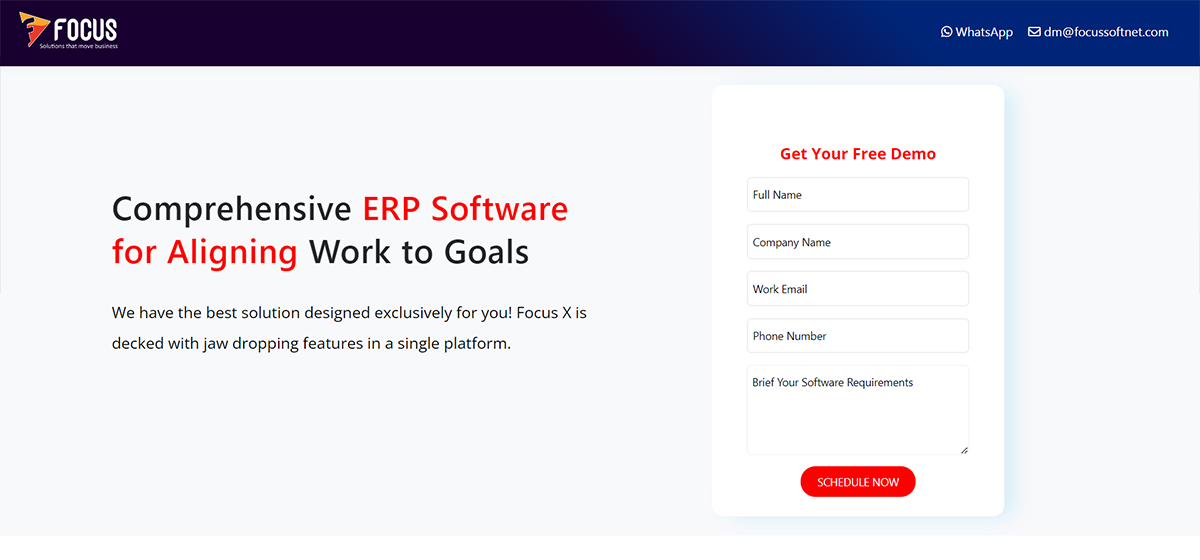
Focus X is a modern ERP solution designed for speed and flexibility, featuring a user-friendly interface that enables faster implementation and adoption. Unlike one-size-fits-all solutions, Focus X adapts to unique business workflows while simplifying multi-company, multi-language, and multi-currency operations. The platform is built to scale alongside evolving business needs and integrates seamlessly with existing applications, providing unified access to critical business data while supporting stronger business process management across the organization.
Features
- All-in-one system to manage finance, human resources, marketing, sales, service, procurement, inventory, and other business functions.
- Offers real-time analytics, customizable dashboards, and comprehensive reporting capabilities.
- Integrates with third-party applications and supports API connectivity.
- Supports configurable workflows and process automation.
- Includes advanced technologies such as artificial intelligence, machine learning, and predictive analytics.
- Provides role-based access controls, data encryption, and enterprise-grade security.
- Ensures compliance with national tax regulations across multiple countries.
- Available in cloud, on-premise, and hybrid deployment models.
Drawbacks
Although Focus X offers broad industry functionality and flexibility, some organizations may require additional configuration to align the solution with highly specialized business processes.
Oracle ERP
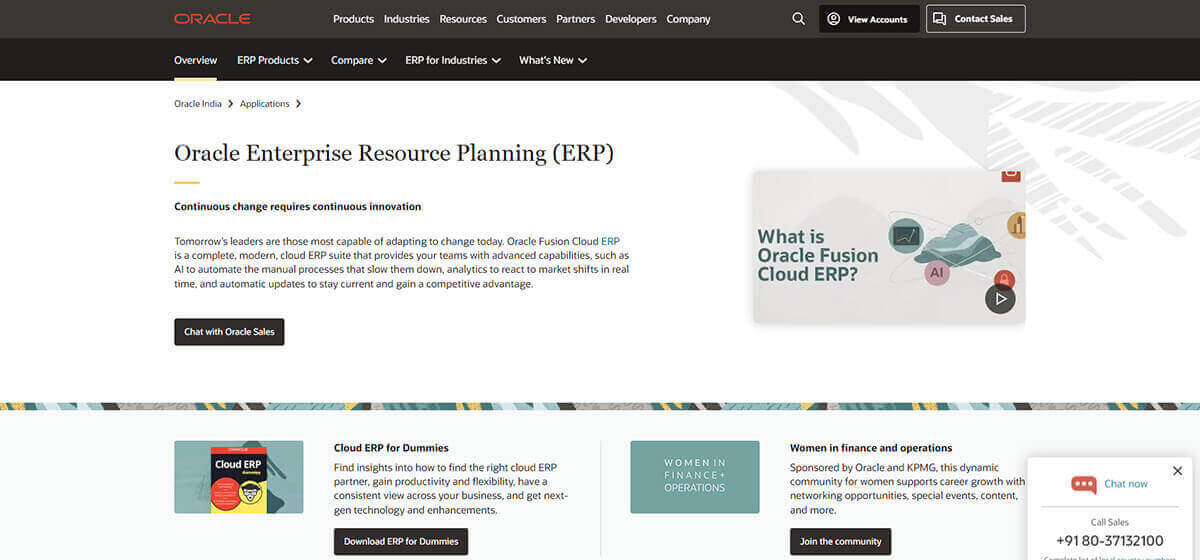
Oracle Cloud ERP is another premier enterprise resource planning software solution. Tailored for enterprises of all sizes, it delivers a complete set of cloud-based enterprise resource planning tools. These tools enhance operational efficiency across supply chain management, financial oversight, project management, and more. Operating in the cloud, Oracle Cloud ERP enables employees across departments to have real-time access to critical data, regardless of their device or operating system. Integrated modules span all facets of business operations, fostering seamless collaboration across teams.
Features
- AI and BI functionalities are integrated for analytical and business intelligence purposes.
- Automation of many business tasks frees up employee time from repetitive duties.
- Secure cloud services are supported by Oracle's global infrastructure.
- Various modules are included, such as accounting, revenue management, procurement, portfolio and project management, and more.
Drawbacks
- Integration with other applications is a bit difficult.
- Need to be more flexible for ease of use.
SAP ERP
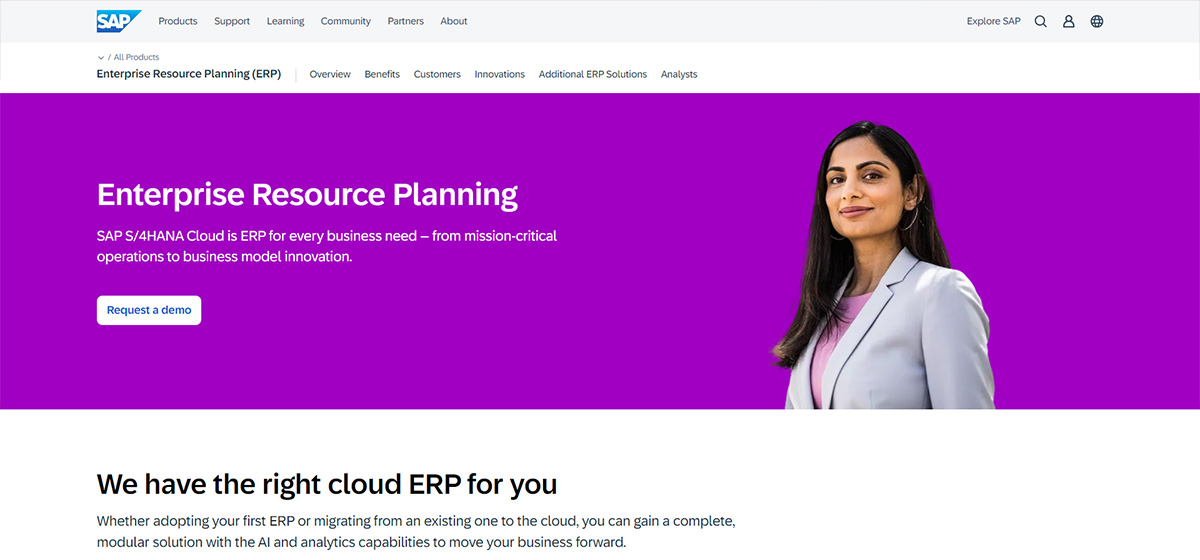
SAP ERP management system centralizes data into a unified hub, facilitating informed decision-making. Offering both on-premise and cloud deployment options, the software caters to individual business needs. Furthermore, its robust data management capabilities and HR streamlining features solidify SAP as a strategic partner, driving operational efficiency and growth.
Features
- Facilitates production cycle forecasting and supports decision-making.
- Offers currency conversion capabilities.
- Ensures compliance with tax regulations across more than 40 countries.
- Automates management of accounts receivable data from clients to minimize manual input.
- Provides detailed analysis of historical service performance using data from billing and operations departments.
- Includes various modules such as HR, attendance, risk, accounting, and profitability analysis, among others.
Drawbacks
- SAP ERP may not easily integrate with existing systems and third-party applications and may require some re-engineering.
- It has a long learning curve. New users and admins need thorough training and ongoing support.
- The system has limited flexibility in switching to alternative ERP solutions or modifying existing systems.
Acumatica ERP
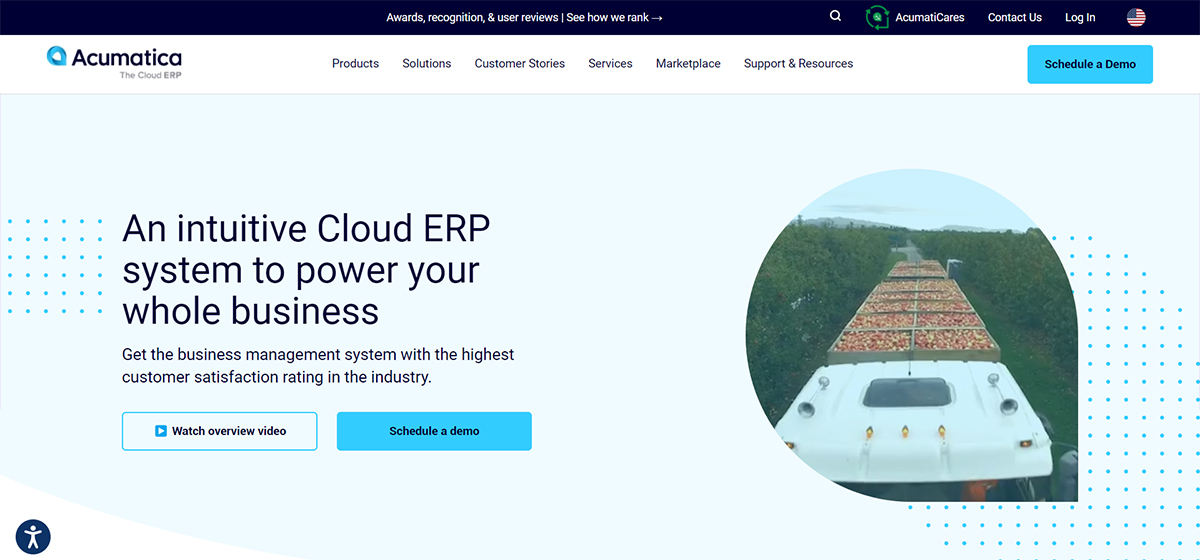
Acumatica ERP software is renowned for its versatility and comprehensiveness, specifically engineered to enhance operational efficiency across a wide array of industries. This robust platform is highly regarded for its flexibility and scalability, providing tailored cloud-based ERP functionalities that seamlessly address the requirements of both small to mid-sized businesses and larger enterprises alike. Its adaptive nature allows organizations to effectively streamline and optimize their business processes, regardless of their industry sector or scale of operations.
Features
- Offers insights into the operational and financial performance of the organization.
- Integrates various modules, including distribution management, financial management, project management, human resources, field service management, manufacturing management, and other functionalities, into a unified system.
- Support multi-currency billing.
Drawbacks
- Customizing the system may require advanced technical expertise and could be time-consuming.
- Integration with 3rd-party systems might require additional configuration.
- Some users may find the UI less intuitive compared to other ERP systems.
Sage X3
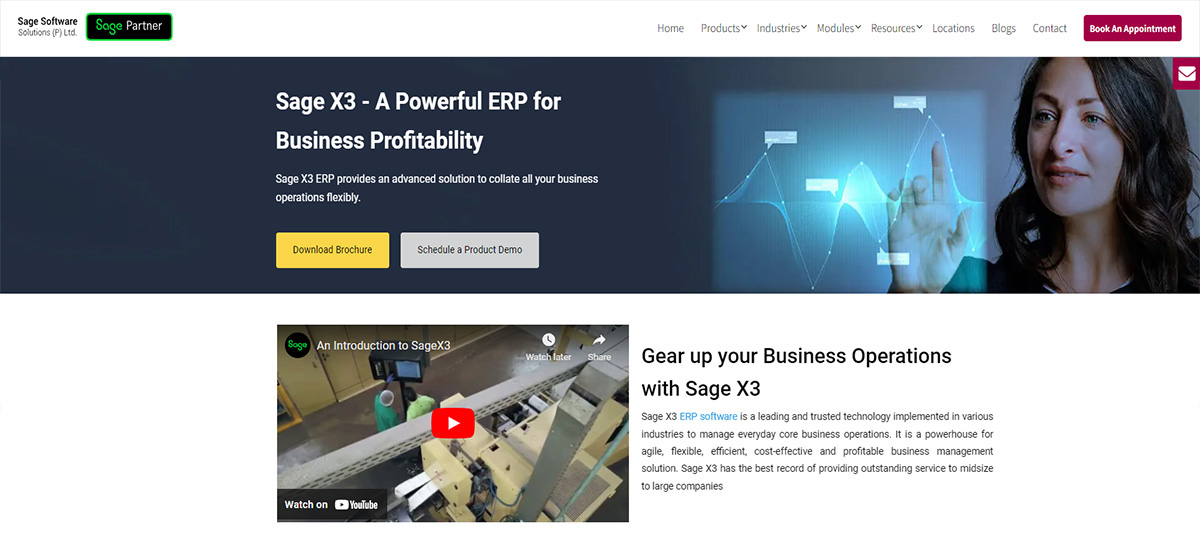
Sage X3 is an ERP solution crafted for diverse industries, seamlessly integrating with finance, supply chain, manufacturing, and distribution functions. It provides advanced financial management, real-time analytics, multi-currency capabilities, and comprehensive inventory management. The user-friendly interface and adaptable deployment options in Sage X3 enables businesses to streamline operations, enhance efficiency, and foster growth in the global marketplace.
Features
- Accessible via the cloud or on-premise servers
- It is compatible with other applications
- Delivers comprehensive business performance reports across various metrics
- Provides dedicated customer support
Drawbacks
- Processing large volumes of data is constrained by several limitations.
- Additional support may require more payment.
Microsoft Dynamics 365
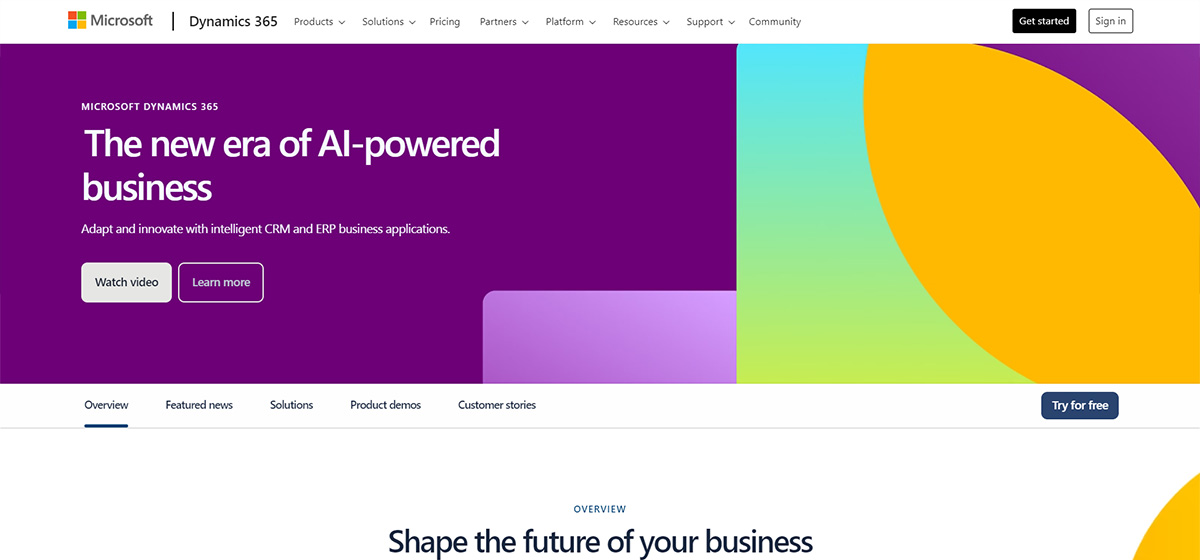
Microsoft Dynamics 365 includes a comprehensive set of business management tools available in both cloud and on-premise versions. It offers a variety of tools aimed at enhancing the efficiency of different business operations, including sales, human resources, customer relationships, and supply chain management.
Features
- Provides a fully functional 30-day free trial
- Includes a mobile app for efficient customer engagement and workplace productivity
- Boasts a powerful, advanced search capability
- More cost-effective compared to other ERP software alternatives
- Comprises several modules, such as Finance & Operations, Customer Support, Sales, Commerce, Marketing, and Human Resources
Drawbacks
- Some users have reported issues with automatic sign-outs
- Performance issues with the reporting tools have been noted
QAD Adaptive ERP
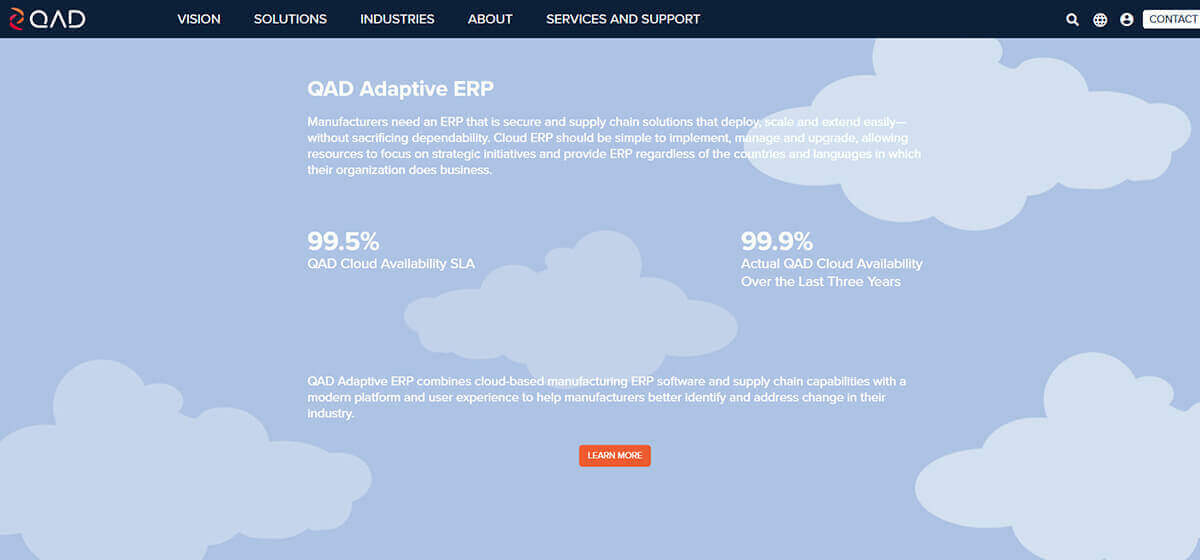
QAD Adaptive ERP is a cloud-based ERP solution designed for manufacturing businesses in sectors such as consumer products, automotive, high-tech, and food and beverages. It offers extensive customization options and supports multiple languages and currencies.
Features
- Improve strategic sourcing to optimize both direct and indirect procurement processes
- QAD's mobile app lets users create, access, and share valuable information instantly from their smartphones
- Support tax compliance of 66 countries across the globe
- Includes modules for all functions such as finance, sales, customer management, supply chain, human resources, and others.
Drawbacks
- Involves significant manual data entry, which runs counter to the efficiency goals of ERP software.
- Filtering large datasets is time-consuming.
Ramco ERP
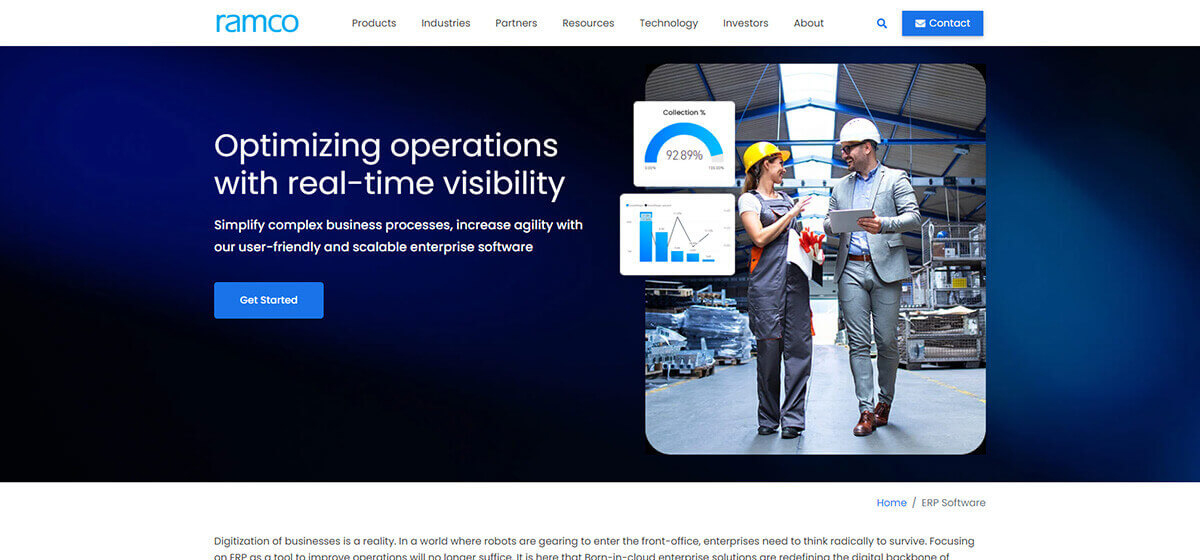
Ramco ERP is an affordable software solution enhanced by AI and ML technologies. The ERP software is ideal for medium and large businesses seeking to streamline essential business operations.
Features
- Adopts a flexible workflow-based approach.
- It integrates face recognition, chatbots, and other intelligent technologies and tools.
- Offers various modules including HR, Payroll, facilities management, asset management solutions, and more.
Drawbacks
- Users may encounter issues with data migration.
- Documentation lacks detailed information about product features.
ERPNext
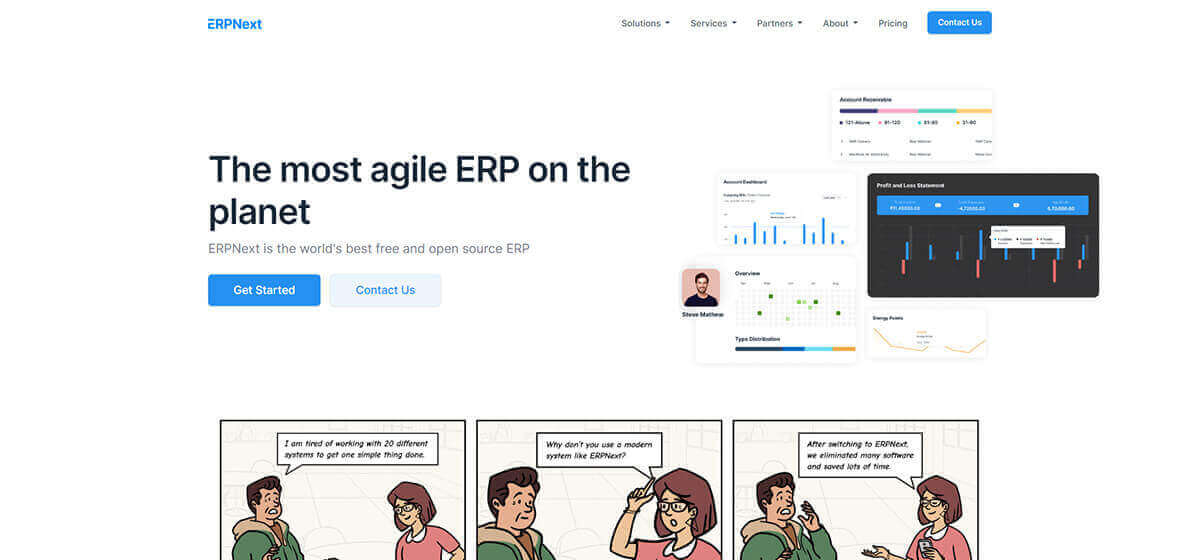
ERPNext is an advanced open-source Enterprise Resource Planning software tailored for small and medium-sized businesses, offered in both on-premise and cloud-based versions. It facilitates expense tracking, payroll management, performance appraisal, and the monitoring of leads and new opportunities.
Features
- Real-time charts for dynamic data visualization
- The software itself is free of cost, with professional services such as implementation and support available on a pay-as-you-go basis tailored to usage levels.
- Applicable across diverse industries, including retail, healthcare, agriculture, non-profit, manufacturing, and e-commerce.
- Comprehensive modules for customer relationship management, sales management, purchase management, inventory management, accounting, help desk, and asset management.
Drawbacks
- Some users find the ERPNext documentation overly technical.
- The platform may be perceived as inflexible for certain customization needs.
Epicor ERP
Epicor is the provider of modern ERP software, offering business management solutions designed to streamline business process management across organizations. It is utilized by businesses of varying sizes and industries to enhance efficiency and maximize return on investment (ROI).
Features
- Facilitates demand forecasting and aligns production capacity accordingly.
- Comprehensive cost management and financial control capabilities.
- Real-time monitoring of processes tailored for different businesses.
- Encompasses modules for financial management, supply chain, e-commerce, production management, point of sale, payment processing, and more.
Drawbacks
- Complex implementation and customization processes.
- The software lacks an intuitive interface
Why Is ERP Software Important for Modern Businesses?
ERP software gets every operation in sync, making businesses more responsive to market changes. By bringing together finance, HR, procurement, manufacturing, sales, and customer-facing functions, a modern ERP management system creates a connected business environment where information flows seamlessly across departments. This unified approach strengthens business process management, improves visibility into day-to-day activities, and enables leaders to make faster, more informed decisions. As a result, organizations gain greater control over business operations management while improving efficiency, collaboration, and overall business performance.
Integrates Business Processes
Disconnected systems often lead to duplicate work, inconsistent reporting, and delayed decision-making. ERP software brings finance, HR, supply chain, manufacturing, and customer operations together within a single platform, enabling teams to work from the same data and collaborate more effectively across the organization.
Provides Real-Time Data
Modern businesses cannot afford to make decisions based on outdated information. ERP systems provide real-time visibility into financial performance, inventory levels, operational activities, and customer interactions, helping leaders identify opportunities, respond to challenges faster, and make more confident business decisions.
Boosts Efficiency and Productivity
Manual processes often consume valuable time and increase the risk of errors. By automating repetitive tasks and streamlining workflows, ERP software allows employees to focus on higher-value activities while improving accuracy, reducing delays, and enhancing overall operational efficiency.
Supports Scalability and Adaptability
As businesses expand into new markets, introduce new products, or manage increasing transaction volumes, operational complexity grows. ERP software provides the flexibility and scalability required to support growth without disrupting existing processes, ensuring the organization remains agile in a changing business environment.
Ensures Compliance and Manages Risk
Maintaining compliance across financial, operational, and regulatory requirements is becoming increasingly complex. ERP systems help organizations establish stronger controls, improve data accuracy, maintain audit readiness, and proactively identify risks before they impact business performance.
Saves Costs and Offers ROI
While ERP implementation requires investment, the long-term benefits often outweigh the initial costs. Improved efficiency, optimized resource utilization, reduced operational waste, and better decision-making contribute to lower operating costs and a stronger return on investment over time.
The Need for Cloud ERP Software
Scalability, cost efficiency, and accessibility drive the growing popularity of cloud ERP software.
The growing adoption of cloud ERP reflects a broader shift toward flexible and scalable enterprise resource planning platforms. Organizations increasingly prefer solutions that can adapt to changing business requirements without significant infrastructure investments. Many businesses are also seeking customized ERP software that aligns with industry-specific workflows while providing the flexibility needed to support future growth.
Unlike traditional systems, cloud ERP provides businesses with flexible, subscription-based solutions that eliminate hefty upfront investments and maintenance costs.
What are Common ERP Software Implementation Challenges?
ERP implementation is often viewed as a technology project, but its success depends just as much on people, processes, and organizational readiness. Even the best ERP software can fail to deliver expected outcomes if businesses underestimate the complexity of data migration, process standardization, user adoption, and system integration.
Understanding potential implementation risks before selecting an enterprise resource planning software solution allows organizations to plan proactively, minimize disruptions, and accelerate time-to-value. Below are some of the most common challenges businesses encounter during ERP implementation.
Data Migration and Data Quality
Migrating years of business data from legacy systems into a new ERP platform is often one of the most resource-intensive stages of implementation. Beyond transferring records, organizations must identify duplicate entries, eliminate inaccuracies, and establish consistent data standards. Poor data quality can affect reporting accuracy, operational efficiency, and decision-making long after the ERP system goes live.
Change Management and User Adoption
ERP implementation frequently transforms how employees perform their day-to-day responsibilities. While the technology may improve efficiency, resistance to change, inadequate training, and unclear communication can slow adoption. Organizations that invest in change management programs, role-based training, and stakeholder engagement often achieve faster user acceptance and stronger long-term results.
Project Governance and Execution
ERP projects involve multiple departments, external consultants, technology partners, and business stakeholders. Without strong governance, clearly defined objectives, and executive sponsorship, implementations can experience delays, scope expansion, and budget overruns. Effective project management ensures accountability, transparency, and alignment throughout the implementation journey.
Integration with Existing Business Systems
Most organizations rely on multiple applications to support finance, HR, CRM, e-commerce, manufacturing, and supply chain operations. Ensuring seamless integration between these systems and the new ERP platform can be challenging. Poor integrations often create data inconsistencies, manual workarounds, and operational inefficiencies that undermine the value of the implementation.
Managing Implementation Costs
ERP investments extend beyond software licensing. Businesses must account for implementation services, data migration, customization, training, integration, infrastructure, and ongoing support. A realistic budget and clearly defined implementation roadmap help organizations avoid unexpected expenses while maximizing return on investment.
Scope Creep and Requirement Expansion
As implementation progresses, organizations often discover additional requirements, workflows, and customization requests. While some enhancements may deliver value, uncontrolled scope expansion can increase project complexity, extend timelines, and inflate costs. Establishing priorities early helps maintain focus on core business objectives.
Data Security and Compliance
ERP implementations involve the movement and consolidation of sensitive business information across departments and locations. Organizations must ensure strong access controls, encryption protocols, audit trails, and compliance measures are in place to protect critical data and reduce cybersecurity risks.
Operational Continuity During Transition
Transitioning from legacy systems to a new ERP environment can temporarily impact productivity and daily operations. Without proper planning, businesses may experience downtime, reporting delays, or workflow disruptions. A phased rollout strategy, clear communication plan, and comprehensive testing process can help maintain operational continuity throughout the transition.
Factors to Consider When Choosing an ERP Software
Choosing the best ERP software requires balancing functionality, scalability, security, and long-term business goals. The right enterprise resource planning software should streamline operations, improve visibility, and adapt as your organization grows. As an integrated business software platform, ERP should connect departments, improve collaboration, and support long-term operational excellence. By carefully evaluating your requirements and comparing leading solutions, you can invest in a platform that delivers lasting business value.
Vendor Reputation
Look beyond market presence and evaluate the vendor's long-term commitment to innovation, customer success, and product development. Review implementation experience, customer references, industry expertise, and the vendor's ability to support your business as requirements evolve.
AI & Innovation Readiness
Evaluate how the solution leverages emerging technologies such as automation, predictive analytics, machine learning, and AI. An AI ERP software platform can help organizations improve forecasting, automate repetitive tasks, and gain deeper operational insights for faster decision-making.
Industry Fit
Industry-specific capabilities can significantly reduce implementation complexity and customization requirements. Assess whether the ERP management system offers features, workflows, and compliance support tailored to your industry.
Budget
Evaluate the total cost of ownership, including licensing, implementation, customization, integrations, training, and ongoing support. The lowest upfront investment does not always deliver the highest long-term value when selecting the best ERP software for your organization.
User-Friendliness
User adoption plays a critical role in ERP success. Choose a solution with an intuitive interface, simplified workflows, mobile accessibility, and role-based dashboards that help employees work more efficiently from day one.
Security
Enterprise data security should be a priority when evaluating enterprise resource planning software. Look for advanced encryption, role-based access controls, audit trails, compliance certifications, and proactive threat protection capabilities.
Flexibility
Every business operates differently. Select a platform that supports configurable workflows, seamless integrations, and customized ERP software capabilities that align with your industry-specific processes and future business requirements.
Scalability
The right ERP platform should support business growth without requiring major system replacements. Scalable enterprise resource planning platforms allow organizations to expand users, locations, transactions, and operational complexity while maintaining performance and efficiency.
ERP Software Guides & Resources
FAQs
What are the main modules of an ERP system?
The main modules of an ERP system typically include finance and accounting, human resources, customer relationship management (CRM), inventory management, procurement, supply chain management, warehouse management, and business intelligence. Additional modules may be added based on business requirements.
How much does ERP software cost?
ERP software costs vary depending on the number of users, deployment model, required modules, customization requirements, and implementation services. Cloud ERP solutions generally follow a subscription-based pricing model, while on-premise systems often require a higher upfront investment.
What are the benefits of ERP software?
The primary benefits of ERP software include improved operational efficiency, centralized data management, process automation, real-time reporting, better collaboration, and informed decision-making. These advantages help businesses improve productivity and reduce operational costs.
Which ERP software is best for growing businesses?
The best ERP software for growing businesses is one that can scale with changing operational needs, support multiple business functions, and adapt to future growth. Businesses should evaluate ERP solutions based on scalability, customization capabilities, integration options, deployment flexibility, ease of use, and long-term value. Choosing the best ERP software helps improve efficiency, streamline operations, and support sustainable business growth.