Global ERP Market: Trends Shaping ERP Buying Decisions
The global ERP market has evolved significantly. There was a time when ERP selection revolved around modules, licensing models, and implementation costs. Those conversations still matter, but they rarely determine the final decision anymore.
The pressure on businesses has changed. Operations now span across multiple locations, suppliers, channels, and customer touchpoints, creating a level of complexity that disconnected systems struggle to keep pace with. Visibility, coordination, and speed have become just as important as functionality.
That's reflected across the global ERP market. Buyers are placing greater emphasis on platforms that connect business functions, automate routine work, and make operational data easier to act on. AI is part of that conversation, but only when it improves how work gets done. Features alone are no longer enough.
The strongest ERP platforms today don't simply centralize information. They help businesses respond faster, adapt more easily, and manage change without introducing more operational complexity.
How ERP Selection Is Changing in 2026
ERP buying decisions are becoming more practical.
Business leaders aren't asking who has the longest feature list. They're asking different questions. How difficult will implementation be? Can the platform scale as the business grows? Will it integrate with existing applications? Does AI solve real operational problems or simply add another layer of technology?
That shift has raised the profile of AI ERP software. Embedded AI now supports everything from forecasting and inventory planning to financial controls and workflow automation. More recently, some vendors have introduced Agentic AI, allowing software agents to complete routine business processes within defined governance and approval rules rather than simply responding to prompts.
Implementation remains just as important. Even the most capable ERP system delivers limited value if projects overrun, adoption stalls, or everyday tasks become more complicated than they need to be.
The right ERP software is ultimately the one that fits the business—not just today, but as operations become larger, faster, and more connected.
How We Evaluated Enterprise Resource Planning Software
Feature lists rarely tell the whole story.
An ERP that works well for a multinational manufacturer won't necessarily suit a distributor expanding into two new markets. Likewise, a platform built for rapid deployment may not offer the depth some enterprises require. Context matters.
This comparison focuses on the factors that matter most to ERP buyers today, including operational capabilities, AI innovation, deployment flexibility, implementation complexity, scalability, and long-term business value.
Top 10 ERP Software
Choosing an ERP platform isn't about finding the solution with the longest feature list. Below is a list of enterprise resource planning software options suited to different business needs. Rather than ranking them solely on popularity, we've considered their functionality, scalability, AI capabilities, deployment flexibility, and suitability for modern business operations.
Focus X
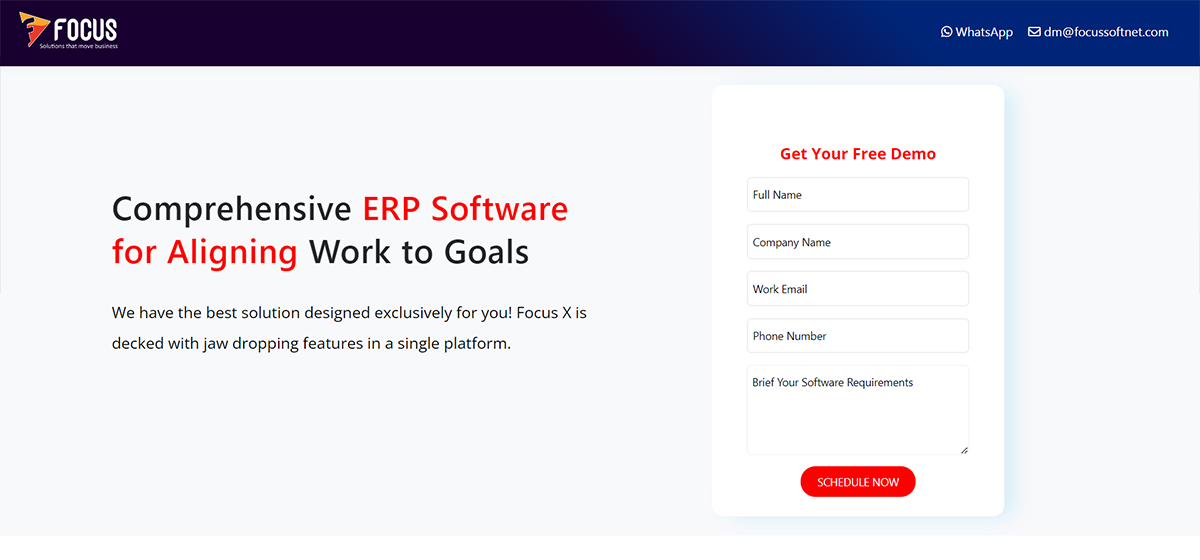
Focus X takes a connected approach to ERP. Finance, procurement, manufacturing, inventory, HR, CRM, sales, and service operate on the same platform, creating an intelligent ERP system that reduces the disconnect that often develops as businesses add new systems over time.
Flexibility is one of its stronger characteristics. Businesses can deploy it in the cloud, on-premises, or in a hybrid environment, with customized ERP software and configurable workflows making it easier to align the platform with existing operating models rather than redesigning processes around the software.
Recent releases have also introduced Agentic AI, adding intelligent automation capabilities to its AI-powered ERP solution. Intelligent agents can execute routine business workflows, not simply generate recommendations. Tasks such as validating purchase requests, routing approvals, or coordinating actions across modules can be automated within predefined governance rules, giving teams greater efficiency without sacrificing oversight.
Features
- Unified platform across core business functions
- Embedded AI and Agentic AI
- Cloud, on-premises, and hybrid deployment
- Open APIs and configurable workflows
- Multi-company and multi-country support
Drawbacks
Organizations with highly specialized operational processes may require additional configuration during implementation.
Oracle ERP
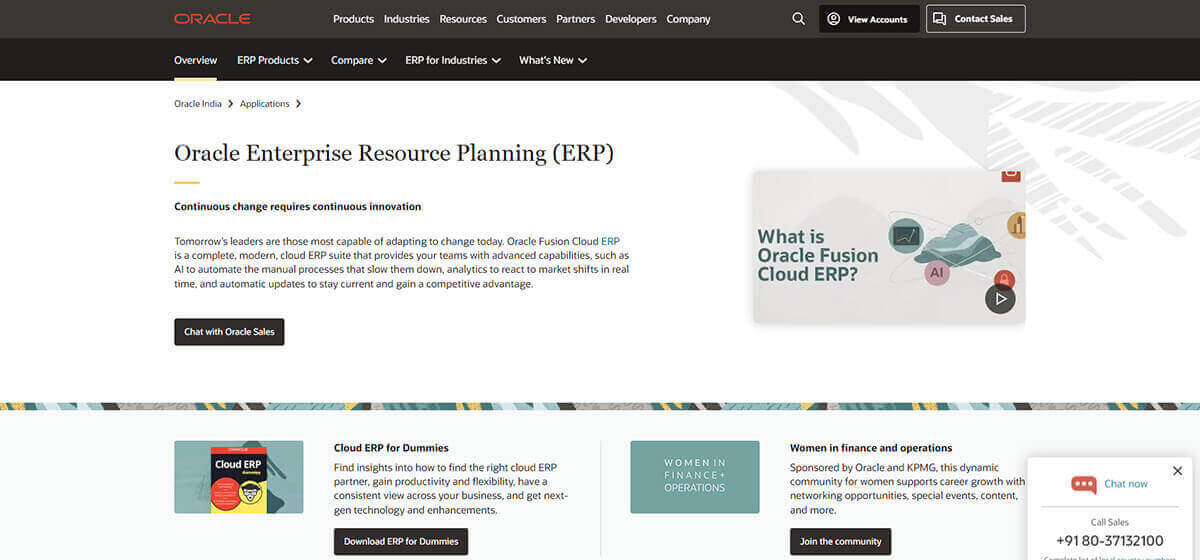
Oracle Cloud ERP is another premier enterprise resource planning software solution. Tailored for enterprises of all sizes, it delivers a complete set of cloud-based enterprise resource planning tools. These tools enhance operational efficiency across supply chain management, financial oversight, project management, and more. Operating in the cloud, Oracle Cloud ERP enables employees across departments to have real-time access to critical data, regardless of their device or operating system. Integrated modules span all facets of business operations, fostering seamless collaboration across teams.
Features
- AI and BI functionalities are integrated for analytical and business intelligence purposes.
- Automation of many business tasks frees up employee time from repetitive duties.
- Secure cloud services are supported by Oracle's global infrastructure.
- Various modules are included, such as accounting, revenue management, procurement, portfolio and project management, and more.
Drawbacks
- Integration with other applications is a bit difficult.
- Need to be more flexible for ease of use.
SAP ERP
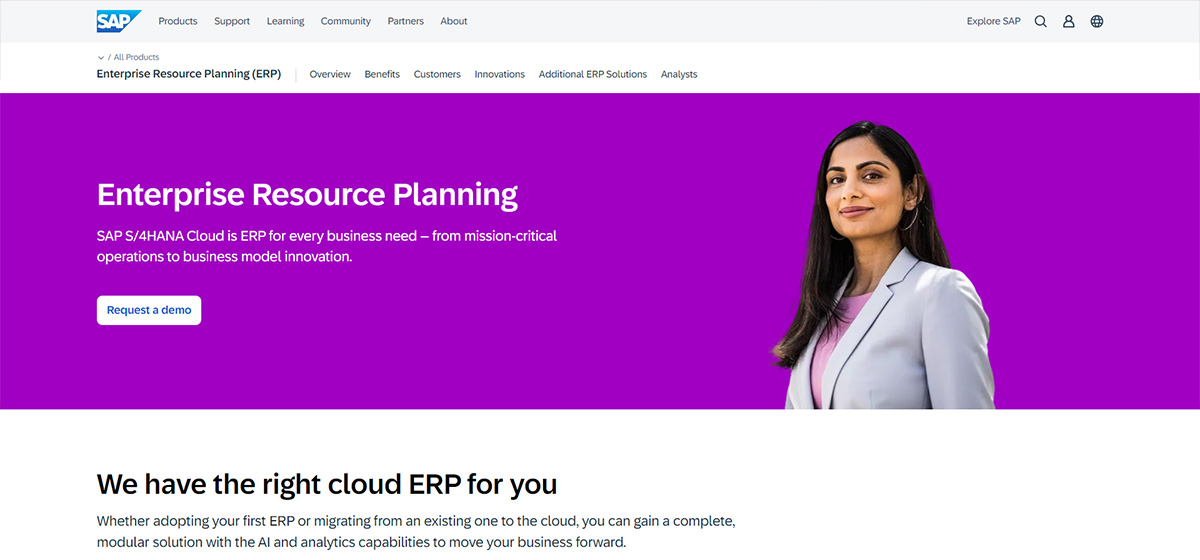
SAP ERP management system centralizes data into a unified hub, facilitating informed decision-making. Offering both on-premise and cloud deployment options, the software caters to individual business needs. Furthermore, its robust data management capabilities and HR streamlining features solidify SAP as a strategic partner, driving operational efficiency and growth.
Features
- Facilitates production cycle forecasting and supports decision-making.
- Offers currency conversion capabilities.
- Ensures compliance with tax regulations across more than 40 countries.
- Automates management of accounts receivable data from clients to minimize manual input.
- Provides detailed analysis of historical service performance using data from billing and operations departments.
- Includes various modules such as HR, attendance, risk, accounting, and profitability analysis, among others.
Drawbacks
- SAP ERP may not easily integrate with existing systems and third-party applications and may require some re-engineering.
- It has a long learning curve. New users and admins need thorough training and ongoing support.
- The system has limited flexibility in switching to alternative ERP solutions or modifying existing systems.
Acumatica ERP
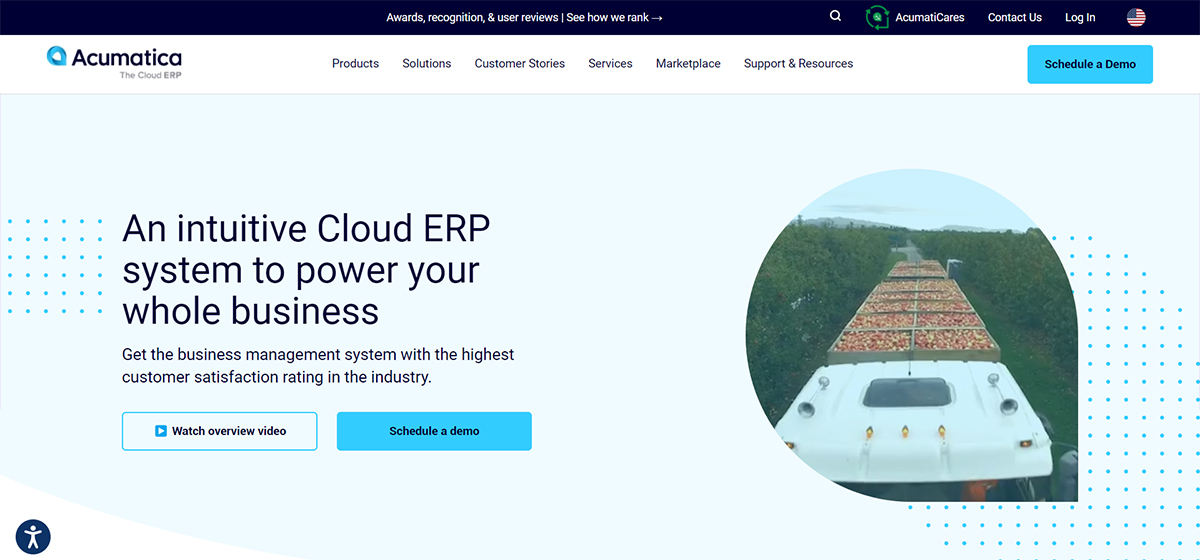
Acumatica ERP software is renowned for its versatility and comprehensiveness, specifically engineered to enhance operational efficiency across a wide array of industries. This robust platform is highly regarded for its flexibility and scalability, providing tailored cloud-based ERP functionalities that seamlessly address the requirements of both small to mid-sized businesses and larger enterprises alike. Its adaptive nature allows organizations to effectively streamline and optimize their business processes, regardless of their industry sector or scale of operations.
Features
- Offers insights into the operational and financial performance of the organization.
- Integrates various modules, including distribution management, financial management, project management, human resources, field service management, manufacturing management, and other functionalities, into a unified system.
- Support multi-currency billing.
Drawbacks
- Customizing the system may require advanced technical expertise and could be time-consuming.
- Integration with 3rd-party systems might require additional configuration.
- Some users may find the UI less intuitive compared to other ERP systems.
Sage X3
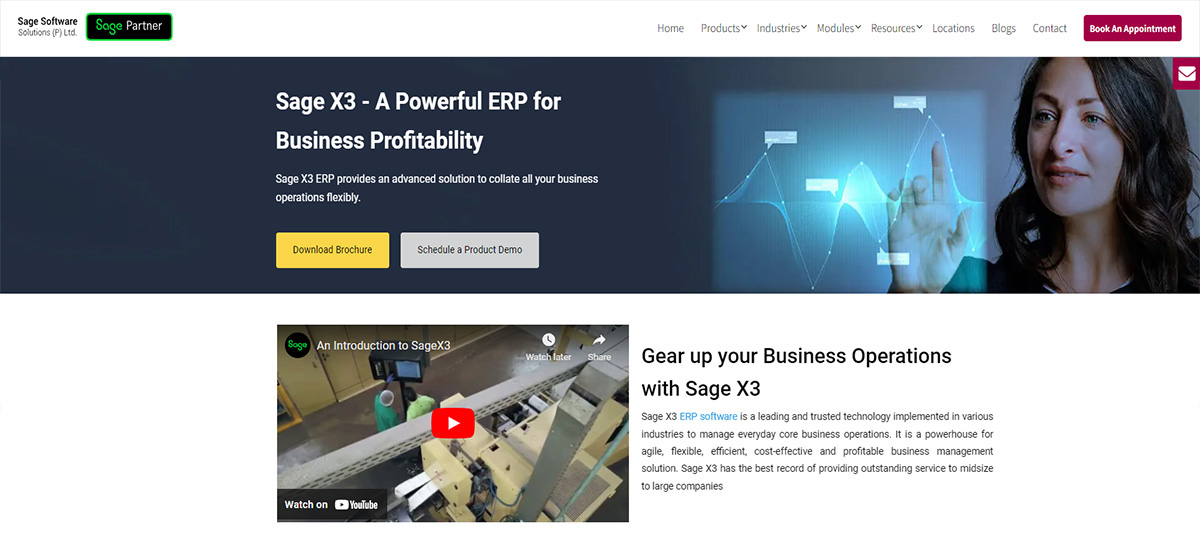
Sage X3 is an ERP solution crafted for diverse industries, seamlessly integrating with finance, supply chain, manufacturing, and distribution functions. It provides advanced financial management, real-time analytics, multi-currency capabilities, and comprehensive inventory management. The user-friendly interface and adaptable deployment options in Sage X3 enables businesses to streamline operations, enhance efficiency, and foster growth in the global marketplace.
Features
- Accessible via the cloud or on-premise servers
- It is compatible with other applications
- Delivers comprehensive business performance reports across various metrics
- Provides dedicated customer support
Drawbacks
- Processing large volumes of data is constrained by several limitations.
- Additional support may require more payment.
Microsoft Dynamics 365
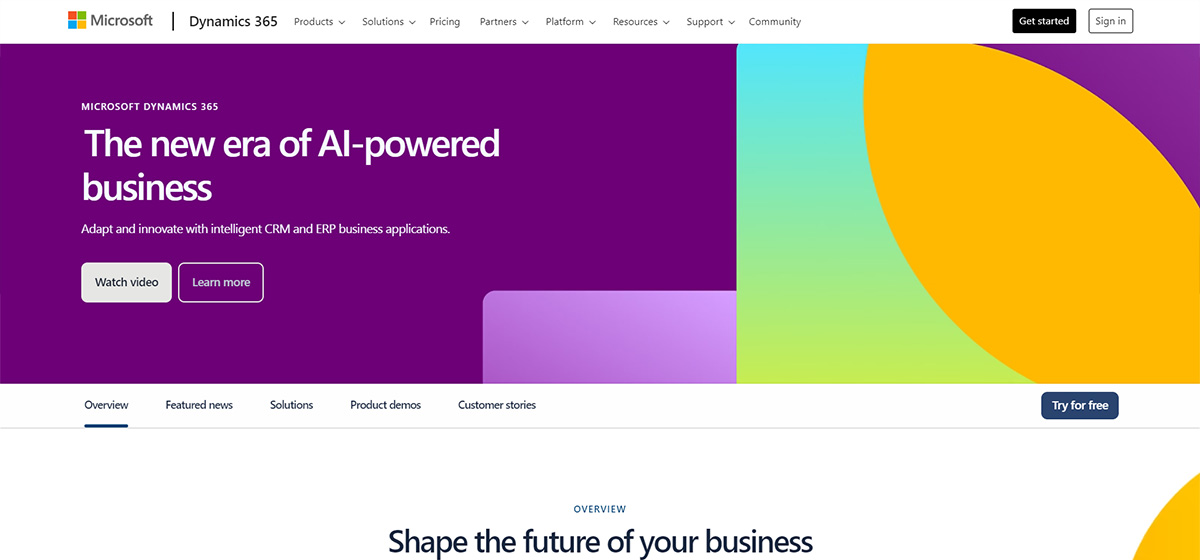
Microsoft Dynamics 365 includes a comprehensive set of business management tools available in both cloud and on-premise versions. It offers a variety of tools aimed at enhancing the efficiency of different business operations, including sales, human resources, customer relationships, and supply chain management.
Features
- Provides a fully functional 30-day free trial
- Includes a mobile app for efficient customer engagement and workplace productivity
- Boasts a powerful, advanced search capability
- More cost-effective compared to other ERP software alternatives
- Comprises several modules, such as Finance & Operations, Customer Support, Sales, Commerce, Marketing, and Human Resources
Drawbacks
- Some users have reported issues with automatic sign-outs
- Performance issues with the reporting tools have been noted
QAD Adaptive ERP
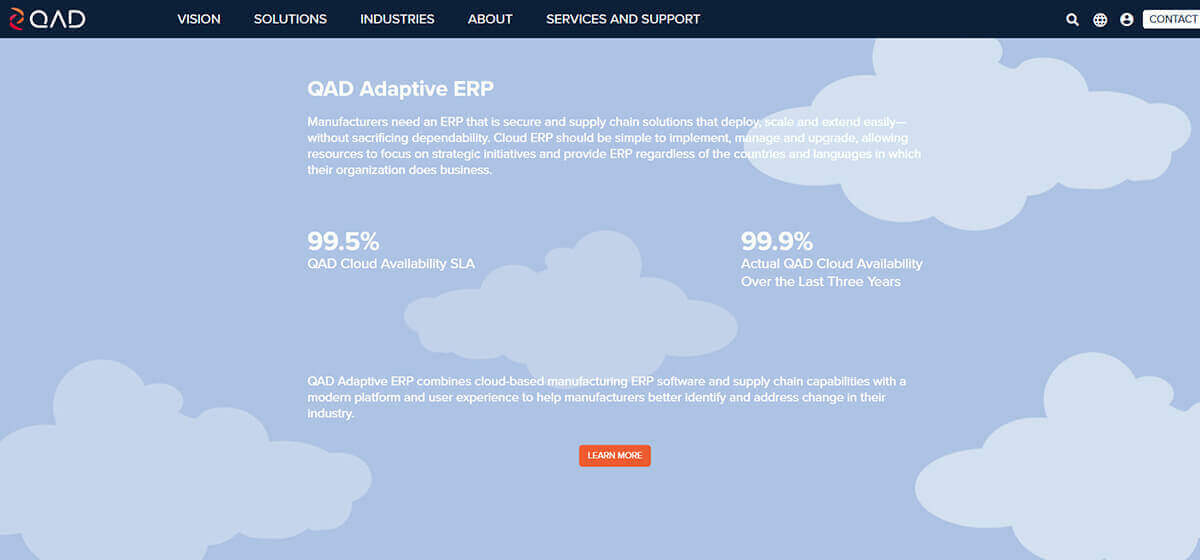
QAD Adaptive ERP is a cloud-based ERP solution designed for manufacturing businesses in sectors such as consumer products, automotive, high-tech, and food and beverages. It offers extensive customization options and supports multiple languages and currencies.
Features
- Improve strategic sourcing to optimize both direct and indirect procurement processes
- QAD's mobile app lets users create, access, and share valuable information instantly from their smartphones
- Support tax compliance of 66 countries across the globe
- Includes modules for all functions such as finance, sales, customer management, supply chain, human resources, and others.
Drawbacks
- Involves significant manual data entry, which runs counter to the efficiency goals of ERP software.
- Filtering large datasets is time-consuming.
Ramco ERP
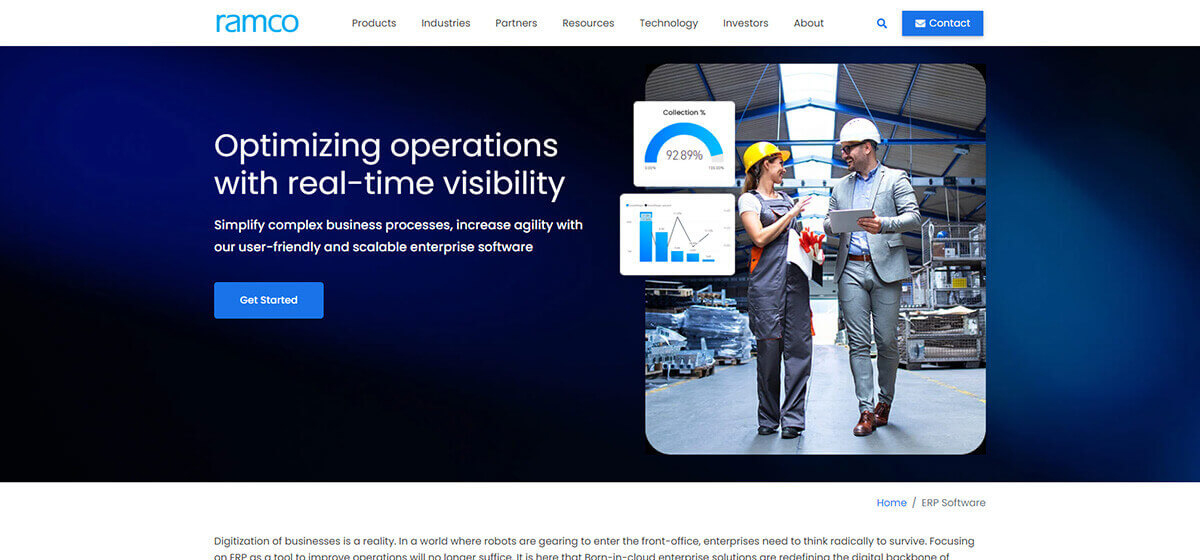
Ramco ERP is an affordable software solution enhanced by AI and ML technologies. The ERP software is ideal for medium and large businesses seeking to streamline essential business operations.
Features
- Adopts a flexible workflow-based approach.
- It integrates face recognition, chatbots, and other intelligent technologies and tools.
- Offers various modules including HR, Payroll, facilities management, asset management solutions, and more.
Drawbacks
- Users may encounter issues with data migration.
- Documentation lacks detailed information about product features.
ERPNext
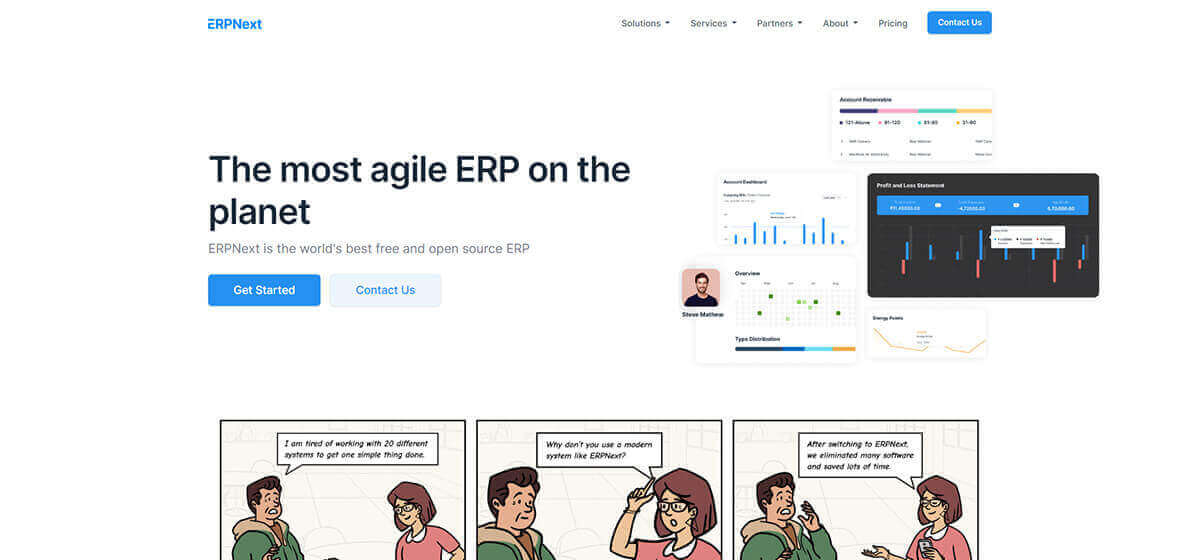
ERPNext is an advanced open-source Enterprise Resource Planning software tailored for small and medium-sized businesses, offered in both on-premise and cloud-based versions. It facilitates expense tracking, payroll management, performance appraisal, and the monitoring of leads and new opportunities.
Features
- Real-time charts for dynamic data visualization
- The software itself is free of cost, with professional services such as implementation and support available on a pay-as-you-go basis tailored to usage levels.
- Applicable across diverse industries, including retail, healthcare, agriculture, non-profit, manufacturing, and e-commerce.
- Comprehensive modules for customer relationship management, sales management, purchase management, inventory management, accounting, help desk, and asset management.
Drawbacks
- Some users find the ERPNext documentation overly technical.
- The platform may be perceived as inflexible for certain customization needs.
Epicor ERP
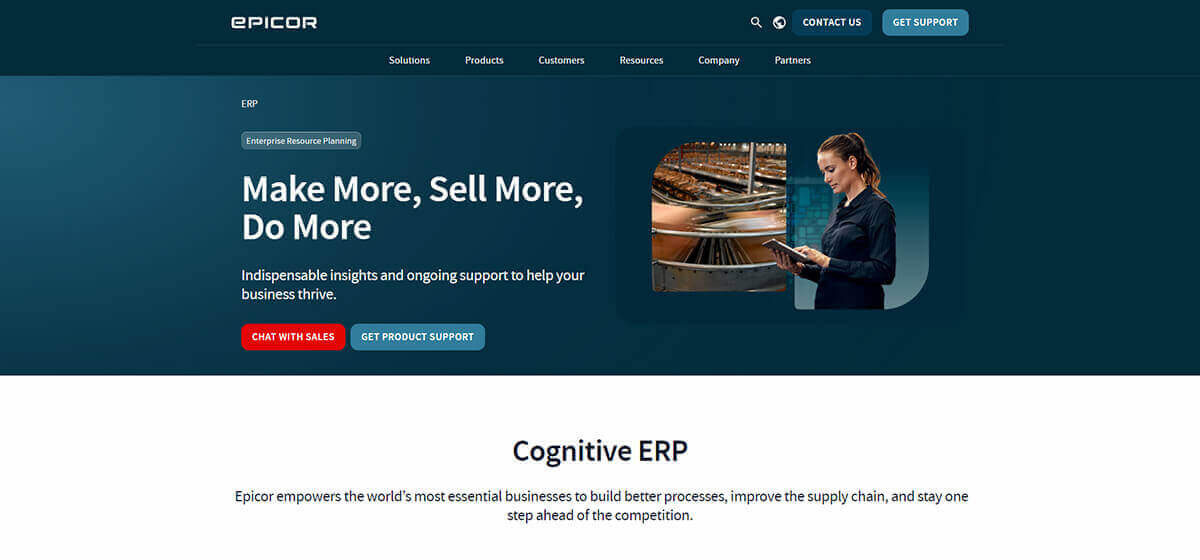
Epicor is the provider of modern ERP software, offering business management solutions designed to streamline business process management across organizations. It is utilized by businesses of varying sizes and industries to enhance efficiency and maximize return on investment (ROI).
Features
- Facilitates demand forecasting and aligns production capacity accordingly.
- Comprehensive cost management and financial control capabilities.
- Real-time monitoring of processes tailored for different businesses.
- Encompasses modules for financial management, supply chain, e-commerce, production management, point of sale, payment processing, and more.
Drawbacks
- Complex implementation and customization processes.
- The software lacks an intuitive interface
Why Is ERP Software Important for Modern Businesses?
Enterprise software is often evaluated by the features it offers. Its real value, however, lies in how effectively it supports day-to-day operations.
An ERP management system connects finance, procurement, inventory, manufacturing, HR, sales, and customer operations within a single platform, replacing disconnected processes with shared data and standardized workflows.
As organizations grow, this connected approach becomes increasingly important. Integrated business software helps teams work from a single source of truth while reducing the need to manage and reconcile information across multiple systems.
Integrates Business Processes
Disconnected systems create unnecessary friction. Finance works from one dataset, operations from another, and sales from a third. The result is duplicated effort, reporting inconsistencies, and delayed decisions.
Enterprise resource planning platforms bring these functions together, supporting business process management by enabling information to move seamlessly across departments and helping teams operate with greater coordination.
Delivers Real-Time Operational Visibility
Business decisions rarely wait for month-end reports. Leaders need access to current financial performance, inventory levels, procurement activity, and customer information as events unfold.
Modern ERP platforms provide real-time visibility into business operations, allowing organizations to identify issues earlier, respond faster to changing conditions, and make more informed decisions.
Automates Routine Work
Manual approvals, repetitive data entry, and disconnected workflows consume valuable time while increasing the likelihood of errors.
Modern ERP solutions automate routine business processes across finance, procurement, inventory, HR, and operations, helping organizations improve business operations management. Many platforms also embed AI capabilities that assist with forecasting, exception management, and workflow optimization, allowing employees to focus on higher-value work rather than administrative tasks.
Supports Growth Without Increasing Complexity
Business growth often introduces operational complexity. New locations, additional users, expanding product portfolios, and international operations place greater demands on business systems.
A scalable ERP platform enables organizations to manage this growth without replacing core systems or introducing disconnected applications, ensuring processes remain consistent as the business evolves.
Strengthens Governance and Compliance
As regulatory requirements continue to evolve, maintaining compliance has become an operational priority rather than an administrative task.
ERP software helps organizations establish stronger financial controls, maintain audit trails, manage user permissions, and support compliance with local tax, financial, and industry regulations while improving overall data governance.
Improves Long-Term Business Value
The return on an ERP investment extends beyond operational efficiency. By improving data accuracy, reducing manual effort, streamlining workflows, and supporting better decision-making, ERP platforms help organizations build a more agile and resilient operating model that can adapt as business requirements change.
What to Consider Before ERP Implementation
Selecting the ERP software is only the beginning. The long-term success of an ERP initiative depends just as much on planning, governance, and organizational readiness as it does on the technology itself. Before implementation begins, businesses should evaluate the following areas to reduce risk, accelerate adoption, and maximize the return on their investment.
Choose the Right Deployment Model
Cloud ERP has become the preferred choice for many organizations because it offers scalability, automatic updates, and lower infrastructure overhead. However, businesses operating in highly regulated industries or with specific data residency requirements may find a hybrid or on-premises deployment more appropriate. The right deployment model should align with your operational, security, and compliance requirements—not just your IT strategy.
Access Data Readiness
An ERP system is only as effective as the data it relies on. Before migrating to a new platform, organizations should review existing data, remove duplicates, standardize records, and establish clear governance policies. A clean data foundation improves reporting accuracy and supports better decision-making from day one.
Review Business Process Alignment
ERP implementation provides an opportunity to review how the business operates and support broader digital business transformation. Rather than replicating inefficient legacy processes, organizations should identify opportunities to standardize workflows, eliminate manual steps, and align operations with long-term business objectives.
Plan Your Integration Strategy
Most businesses depend on multiple applications across finance, HR, CRM, manufacturing, e-commerce, and payroll. Evaluating integration requirements early helps ensure data flows seamlessly between systems, reducing manual work and improving operational visibility.
Prepare Change Management and User Adoption
Technology alone doesn't drive transformation. Employees need clear communication, practical training, and ongoing support to adopt new processes with confidence. Organizations that invest in change management often experience faster adoption and stronger long-term outcomes.
Establish Strong Project Governance
A successful ERP implementation requires clear ownership, defined objectives, and executive sponsorship. Strong governance helps keep projects aligned with business priorities while reducing the risk of delays, scope changes, and budget overruns.
Evaluate Your Implementation Partner
The success of an ERP project depends as much on the implementation partner as the platform itself. Industry expertise, implementation methodology, local support, and post-go-live services all influence long-term outcomes. Choosing a vendor with proven implementation experience can significantly reduce project risk.
Think Beyond Go-Live
ERP implementation shouldn't only address current business needs. Consider whether the platform can support future expansion, additional users, new locations, evolving compliance requirements, and emerging technologies such as AI-driven automation.
FAQs
1. What is ERP software?
ERP software connects core business functions such as finance, procurement, inventory, manufacturing, HR, sales, and customer service on a unified platform.
How much does ERP software cost?
ERP software costs vary depending on the number of users, deployment model, required modules, customization requirements, and implementation services. Cloud ERP solutions generally follow a subscription-based pricing model, while on-premise systems often require a higher upfront investment.
2. What is the best ERP software in 2026?
The right ERP solution depends on business size, industry, operational complexity, budget, and growth plans. Leading options include Focus X, Oracle Cloud ERP, SAP, Microsoft Dynamics 365, Acumatica, Sage X3, QAD Adaptive ERP, Ramco ERP, ERPNext, and Epicor.
3. How do I choose the best ERP software for my business?
Evaluate your business processes, scalability needs, integrations, deployment requirements, AI capabilities, security, and implementation resources. The right ERP should address current operational needs without creating unnecessary complexity as the business grows.
4. How is AI changing ERP software?
AI is expanding ERP beyond transaction processing by supporting forecasting, anomaly detection, workflow automation, and decision-making. Newer Agentic AI capabilities can also execute defined business workflows rather than simply provide recommendations.
5. What should I consider before implementing ERP software?
Assess data readiness, business processes, integrations, deployment model, user adoption, project governance, implementation expertise, and future scalability before starting the project.
6. How much does ERP software cost?
ERP costs vary based on the number of users, modules, deployment model, integrations, customization, implementation, and ongoing support. Comparing total cost of ownership is more useful than looking at software pricing alone.